
Ruairi Spillane
Founder Outpost Recruitment
We'll help you find a job in mining.
Start by registering with Outpost—it's free!
Driven by net-zero targets (reducing greenhouse gas emissions), electrification, and surging power demand from data centres, EVs, and industry, the country is now seeing a wave of energy storage solutions, hydro, solar and wind energy projects moving from proposal to construction. According to the Canadian Renewable Energy Association, more than 8 GW of new renewable capacity is expected to come online by 2029, with steady growth starting now.
At the end of 2025, Canada’s total wind, solar and storage installed capacity is approximately 25 GW, including:
- Nearly 19 GW of wind power capacity
- More than 5 GW of solar and
- Nearly 1 GW of energy storage.
Federal funds for companies impacted by trade tariffs in May 2026 will likely help renewable energy projects move forward, given that tariffs have heavily impacted the sector on steel products.
Table of Contents
Global context versus US, Australia & UK
Canada is the clear leader among these four countries when it comes to the share of electricity generated from renewables, largely because of its massive hydroelectric system. The UK leads in the speed of energy transition away from fossil fuels, while Australia is rapidly expanding solar and wind from a lower historical base. The US has the largest total renewable output in absolute terms, but renewables still make up a smaller share of overall electricity generation.
Current capacity / % of overall power generation
- Canada: ~64%
- US: ~23%
- UK: ~50%
- Australia ~40%
Canada is a late mover in terms of diversifying their renewable sector due to lack of policy development. Compared to the US, there is no Dept of Energy in Canada pushing policy with tax incentives, tax credits and a framework for renewable development. We have Natural Resources Canada (NRC) which doesn’t do things to scale relative to the US although things have backtracked under Trump in recent years.
For job seekers, a growing renewable sector means opportunities across engineering, construction, project management, environmental services, and operations—right across the country.
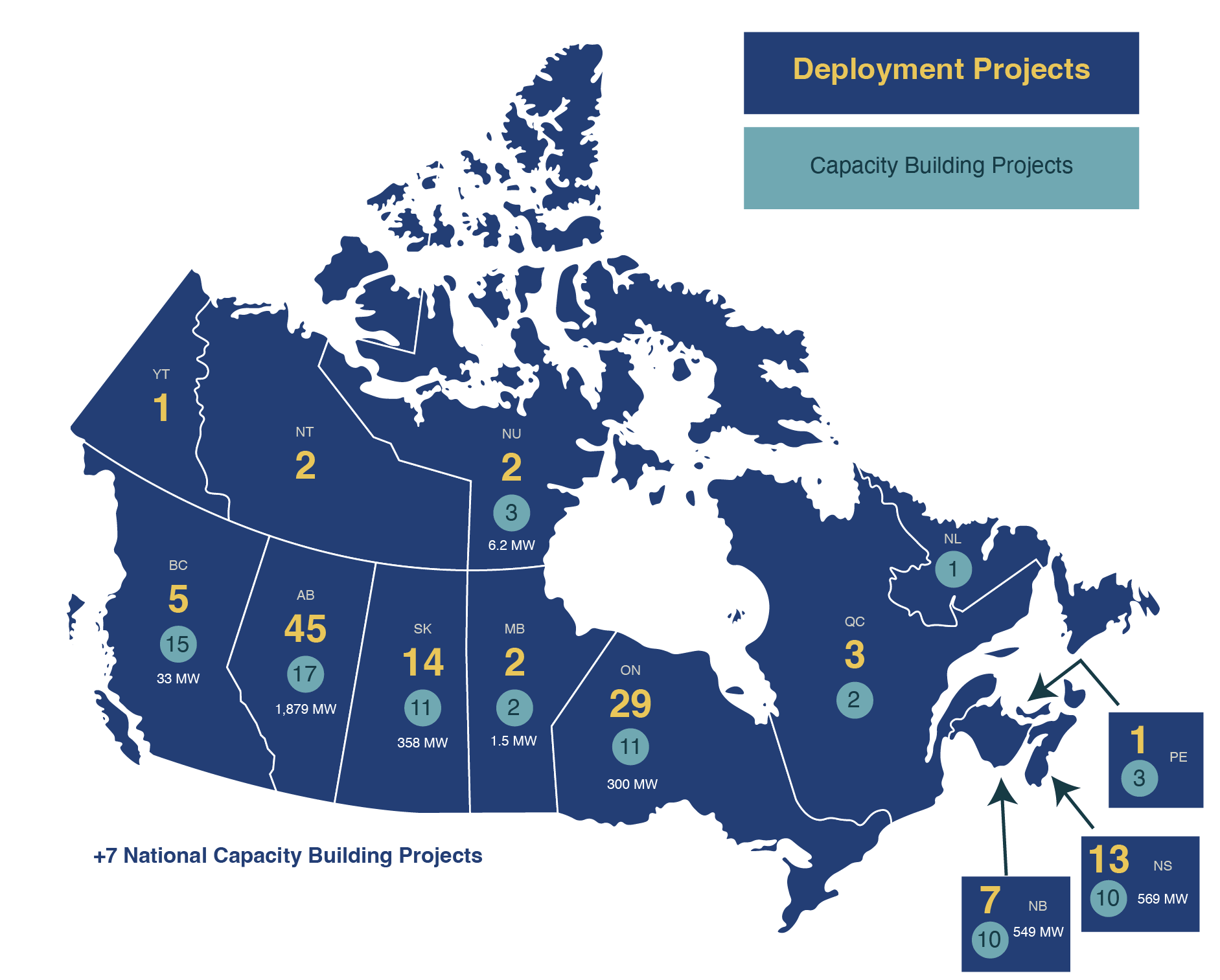
Western Canada: Canada’s Renewable Construction Hotspot
British Columbia: Billions in New Clean Power Projects
B.C. is entering a new phase of renewable development led by BC Hydro’s aggressive procurement strategy. BC has traditionally been a one-trick pony relying on hydroelectric dams, given the abundance of mountains. Site C Hydroelectric dam went live last year, but there are already concerns around keeping up to energy demands with Site E on the radar. BC Hydro operates 82 dams at 40 locations across British Columbia, supporting 30-32 major hydroelectric generating plants. FortisBC operates four additional hydroelectric plants on the Kootenay River
- 10 new renewable projects secured (2024 call to power) – enough to power ~500,000 homes
- Second call to power (2025) targeting up to 5,000 GWh/year of new clean electricity
- Projects include wind, solar, and hydro, many with Indigenous equity ownership (minimum 25%)
These projects are expected to generate thousands of construction jobs with long-term operations roles in rural and northern communities.
Key Projects (BC)
- Site C Clean Energy, Fort St John (1100 MW) – $15bn — hydroelectric dam; fully operational in August 2025.
- Nithi Mountain Wind, Fraser Lake (200 MW wind energy capacity) planned by 2030.
- Stewart Creek Wind, Fort St John (200 MW ) planned by 2029.
- Brewster Wind, Campbell River (197 MW ) planned by 2030.
- Oceanic Offshore Wind (NaiKun), Prince Rupert ( ~400 MW- 2000MW) (proposed, offshore at Hecate Strait between Haida Gwaii and Prince Rupert
- Boulder Elkhart Wind, Merrit / Kelowna (94 MW) utility-scale wind project, comprised of 12 to 16 turbines
- Highland Valley Wind, Logan Lake (197 MW)
- Mount Mabel Wind Farm, Merritt (142 MW)
- K2 Wind, Okanagan (160MW) –
- Multiple other new wind and solar projects tied to BC Hydro’s procurement (details emerging through 2026–2028)
Alberta: Canada’s Wind & Solar Growth Engine
Alberta remains Canada’s most active renewable energy construction market, driven by private investment and corporate power purchase agreements. Recently completed projects include:
- Buffalo Plains Wind Farm (495 MW) – construction complete, one of Canada’s largest wind farms
- Forty Mile Wind Farm (280 MW) – construction complete
Major Projects
- eReserve Program (180 MW wind energy capacity) battery storage added between 2020 and 2024.
- Pe-Na-Koam Wind Farm (300 MW) – pre-construction, Indigenous-led
- Bull Trail Wind Farm (270 MW) – pre-construction
- Homestead Solar (400 MW) solar, planned by 2026.
- Brooks Solar Farm (360 MW) solar, 2024–2026.
- Bull Trail Wind (300 MW) wind, planned by 2029.
- Jurassic Solar and Battery Storage (220 MW) solar + 80 MW battery, planned by 2028.
- Killarney Lake Solar and Battery Storage— 22.5 MW solar + 100 MW storage, planned by 2026.
Alberta is currently the best province for renewable construction jobs
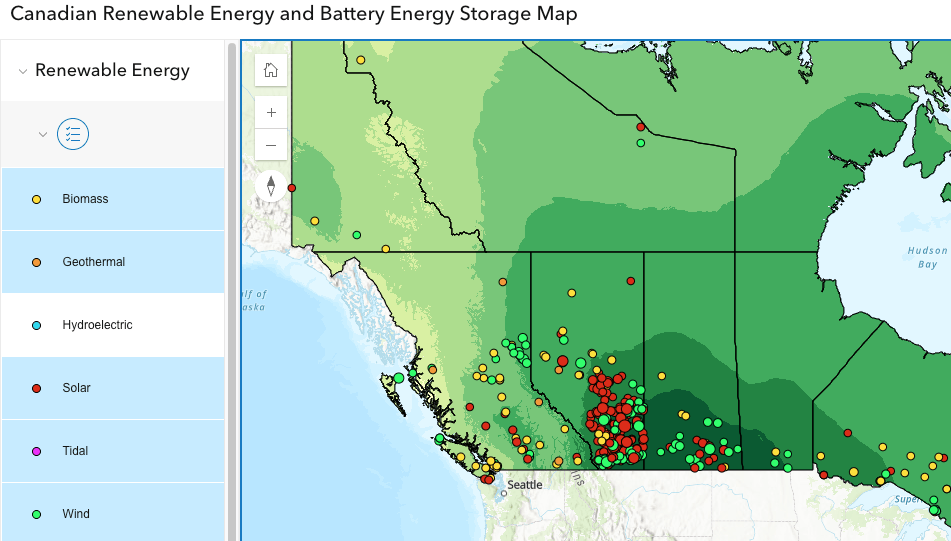 Alberta, Renewable Energy and Battery Energy Storage Map. Source: Future Energy Systems (University of Alberta)
Central Canada: Scaling Up Wind, Solar and Grid Infrastructure
Saskatchewan & Manitoba: Emerging Markets
While smaller today, these provinces are expanding renewable capacity to reduce reliance on fossil fuels. Growth focused on wind, solar, and grid modernization and increasing federal funding through programs like Smart Renewables and Electrification Pathways Program (SREPs)
Ontario: Grid Modernization + Solar Expansion
Ontario’s renewable sector is shifting from early wind build-out to energy storage, solar expansion and grid modernization. As of May 2026, Ontario is expanding its renewable energy capacity with 14 new solar and wind projects selected, alongside new battery storage projects entering operation to support a growing grid. Key developments include 1,315 megawatts (MW) of new wind/solar, over 300 MW of new battery capacity (BESS), and ongoing refurbishment of existing clean nuclear energy. Corporate-backed renewable deals tracked across the province
Ontario Power Generation (OPG) continues to operate 66 hydroelectric stations, with ongoing modernization of existing assets
Projects:
- Kakabeka Falls Generating Station Refurbishment – $500m upgrade of existing 25MW hydroelectric project set for completion by end of 2028
- CarbonFree Rainy River Solar: 60 MW (Rainy River First Nations)
- Dunns Valley Solar: 200 MW (Garden River First Nation)
- Elmbrook Agrivoltaics Solar: 19.2 MW
- Portage Power (Kanata I and II): Solar projects in Ottawa.
- Dunrobin Solar Inc.: Dunrobin Solar project.
- West Capital Power (Carp Airport Solar)
- Moose Power (Discover Solar Solutions Now) [1, 2]
- Cramahe Battery Storage Project (BESS SFF 06): A 5 MW battery storage project completed in 2026
- Long-Term 2 (LT2) Energy Procurement: In April 2026, 14 projects were selected (12 solar, 2 wind), totaling 1,315 MW, marking the first large-scale renewable development in over a decade.
Quebec & Atlantic Canada: Large-Scale Wind Development
Quebec: Mega Wind Projects Pipeline
Quebec continues to dominate large-scale wind development, backed by Hydro-Québec. Hydro-Québec operates 61 hydroelectric generating stations and 681 dams.
Key Projects
- Chamouchouane ($9B, 3,000 MW): Located in the Saguenay–Lac-Saint-Jean region, this is one of North America’s largest planned wind sites. It is being developed in partnership with two Indigenous communities and a regional government, with plans to host several hundred turbines.
- Gaspésie ($18B, 6,000 MW): A massive partnership between the Mi’gmaq community of Gesgapegiag, the Alliance de l’énergie de l’Est, and Hydro-Québec, this project on the south side of the Gaspé Peninsula is designed to generate power equivalent to the usage of the entire island of Montreal.
- Des Neiges Wind Farms ($3B, 800 MW+): Located northeast of Quebec City, this project has launched its first two phases (southern and Charlevoix sectors), comprising 114 turbines. A third phase could bring total output to 1,200 MW. The southern sector is expected online by late 2027, with Charlevoix following in late 2028.
- Lower St. Lawrence ($4.5B): The provincial government is supporting a large-scale project in this region to add significant capacity to the grid, as announced in late 2025.
- TES Canada (800 MW): A private industrial project in Shawinigan proposing to use 140 mega-wind turbines to power a green hydrogen plant, functioning as a self-producer
- Multiple community and Indigenous partnership wind projects targeting 2028+ commissioning
Atlantic Canada:
Atlantic Canada is seeing new wind farm development and Increased focus on grid upgrades and interconnections
- Gull Island Hydroelectric ($25bn+, 2250MW) – A planned major 2,250 to 2,700 MW power generating facility on the lower Churchill River in Labrador, situated between Churchill Falls and Muskrat Falls
- Mactaquac Dam, New Brunswick – $9bn+ 15-year refurbishment of existing 672 MW run-of-river hydroelectric facility on the Saint John River in New Brunswick, located about 15 km upstream of Fredericton.
- Mersey River Wind Farm, NS
This region is also positioning itself for offshore wind exports and green hydrogen projects (early-stage)
Northern Canada: Small-Scale but High-Impact Projects
In Canada’s north, renewable projects are smaller—but critical.
- Iqaluit Hydroelectric (15–30 MW) – proposed
Emerging Trends Shaping Renewable Jobs
1. Indigenous Ownership is Now Standard
Many new projects—especially in B.C. and Alberta—require:
- 25%+ Indigenous equity participation
This is reshaping:
- Procurement
- Hiring
- Community engagement roles
2. Energy Storage is the Next Hiring Wave
Battery storage projects are now being built alongside:
- Wind farms
- Solar arrays
Canada’s national project databases now include dedicated battery storage layers, highlighting rapid growth in this sector.
3. Hybrid Projects (Wind + Solar + Storage)
Developers are increasingly combining:
- Wind
- Solar
- Storage
Into single large-scale projects—creating:
- More complex builds
- More multidisciplinary job opportunities
What This Means for Job Seekers
The renewable energy sector is no longer “emerging”—it’s now a core construction and infrastructure industry in Canada.
For job seekers, that means:
High-demand roles:
- Project managers
- Civil & electrical engineers
- Wind turbine technicians
- Environmental specialists
- Construction supervisors
Best regions for jobs
- Alberta – the highest volume of projects
- British Columbia – major procurement wave underway
- Quebec – long-term wind pipeline
- Ontario – grid + storage opportunities
Final Thoughts
Canada’s renewable energy build-out is accelerating fast—and it’s happening nationwide.
With billions in capital investment, Indigenous partnerships, and long-term government backing, this sector is shaping up to be one of the most reliable sources of construction and engineering jobs over the next decade.
If mining defined the last resource boom, renewables may define the next one.
Visit our Project Trackers for other sectors
- Rail Infrastructure
- Water Infrastructure
- Highways & Bridges Infrastructure
- Healthcare Infrastructure
- Nuclear Infrastructure
- Mining Infrastructure
- Data Centre Infrastructure
Related Articles
Ready to Work in Canada's Renewable Energy Sector?
Outpost connects skilled professionals with major renewable energy projects across Canada. Register for free today and be first in line when new roles come up.
Ruairi Spillane
Founder Outpost Recruitment
